


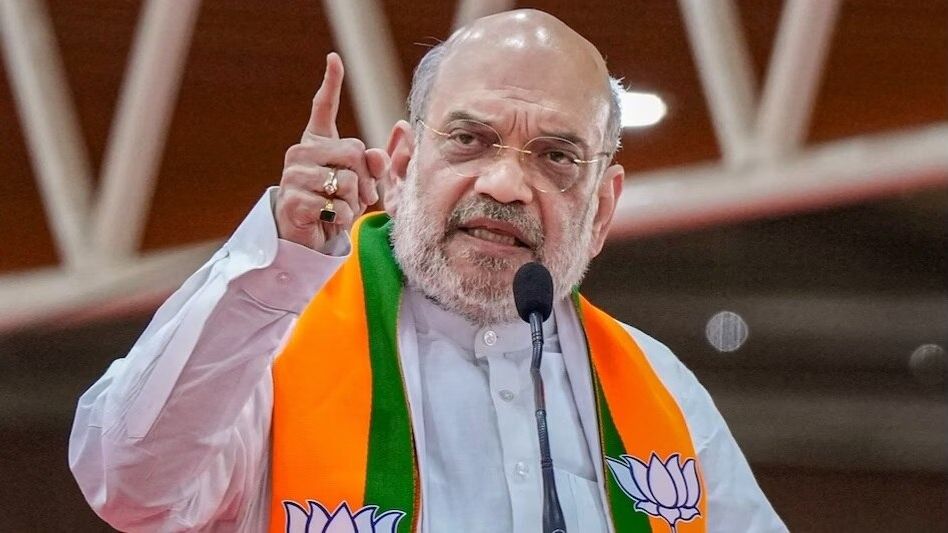
GUWAHATI: Union Home Minister Amit Shah has expressed confidence that most of the Northeast could be free from the Armed Forces (Special Powers) Act (AFSPA) by next year, pointing to the significant improvement in security and stability across the region over the past decade.
Speaking during the signing of a tripartite Memorandum of Understanding (MoU) between the Centre, Assam and Nagaland for joint exploration of crude oil and natural gas along the inter-state border, Shah said the Northeast has undergone a remarkable transformation from a region once affected by insurgency to one increasingly defined by peace and development.
According to the Home Minister, more than 80 per cent of the Northeast has already been brought out of AFSPA’s ambit, and the Centre remains committed to further reducing disturbed areas in Assam, Nagaland and Manipur.
The statement reflects a broader shift in the security landscape of the region. For decades, AFSPA remained a defining feature of governance in several Northeastern states due to insurgency-related violence and law-and-order challenges. Today, however, the Centre argues that sustained peace initiatives, security operations and development programmes have significantly altered the ground situation.
Assam stands out as one of the strongest examples of this transition.
After remaining under the “disturbed area” notification for over three decades, the state began witnessing a phased withdrawal of AFSPA from 2022 onwards. The first major rollback came in April 2022 when the Act was lifted from most districts, leaving only a limited number under its coverage. Subsequent reviews led to further reductions in 2023, including the removal of AFSPA from districts such as Jorhat, Golaghat, Karbi Anglong and Dima Hasao.
Today, the law remains operational only in a handful of districts, including Tinsukia, Sivasagar and Charaideo.
The gradual rollback coincided with major improvements in Assam’s security environment. During this period, Assam Police strengthened intelligence-based policing, enhanced coordination with central security agencies and intensified efforts against militant networks and organised crime.
A significant role in managing this transition was played by senior IPS officer Gyanendra Pratap Singh, popularly known as G.P. Singh, who served first as Special Director General (Law and Order) and later as Director General of Police of Assam between 2023 and 2025.
Known for his experience in counter-terrorism and intelligence operations, Singh oversaw several initiatives aimed at strengthening law enforcement capabilities as AFSPA-covered areas continued to shrink. Senior officials credit the period with improved coordination between Assam Police, the CRPF and intelligence agencies, helping maintain security while gradually transferring greater responsibility to the state police machinery.
Beyond conventional policing, the period also witnessed a series of social and environmental initiatives linked to law enforcement. These included large-scale operations against child marriage, strengthened anti-poaching measures that helped sustain periods of zero rhino poaching, and community-based outreach programmes in sensitive areas.
The Centre attributes the changing security scenario in the Northeast to a combination of peace agreements, insurgent surrenders and focused development efforts undertaken since 2014. According to official data, insurgency-related incidents in the region have declined sharply over the past decade, while civilian and security force casualties have fallen dramatically.
Several major peace accords have contributed to this shift, including agreements involving Bodo groups, Karbi organisations, Adivasi groups, ULFA factions, the UNLF in Manipur and insurgent outfits in Tripura. Thousands of militants have laid down arms during this period, allowing governments to focus increasingly on development and economic integration.
The improved security environment is also beginning to influence economic activity. The recently signed Assam-Nagaland hydrocarbon exploration agreement was cited by Shah as an example of how peace and stability are enabling long-pending projects and unlocking new opportunities for investment, employment and energy security.
With AFSPA already withdrawn entirely from Tripura and Meghalaya and substantially reduced elsewhere, the Centre believes the Northeast is entering a new phase marked less by conflict and more by growth, connectivity and regional cooperation.
While officials acknowledge that security challenges persist in some pockets, the trajectory, they argue, is increasingly moving toward normalcy. If current trends continue, the coming year could mark another milestone in the region’s long journey from insurgency to peace.