


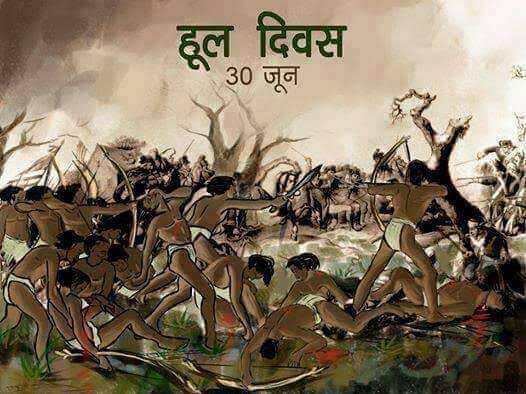
Hul Divas, observed every year on 30th June, commemorates the historic Santal Rebellion (Hul) led by Sido Murmu and Kanhu Murmu, two revered tribal leaders who stood against the oppressive British colonial rule and their local allies—zamindars and moneylenders. This day marks a powerful chapter in India’s tribal resistance movement and is a symbol of the indomitable courage of the Santal community.
The Background
In the mid-19th century, the Santals—an indigenous tribal community primarily inhabiting parts of present-day Jharkhand, Bihar, West Bengal, and Odisha—were facing severe exploitation. They were forcibly displaced from their ancestral lands due to increasing British control and the expanding zamindari system. As they settled in the forested areas of Damin-i-Koh (now in Jharkhand), they encountered ruthless moneylenders, landlords, and British officials who imposed harsh taxes, seized land, and forced them into bonded labor.
The Uprising
Amid this exploitation, Sido Murmu and Kanhu Murmu, two young Santal brothers, emerged as leaders. On 30th June 1855, they called for a “Hul” (which means rebellion or revolution in the Santali language) against the British Raj and their collaborators. They mobilized around 50,000 Santals in what became one of the first major tribal uprisings in the country—four years before the Sepoy Mutiny of 1857.
The rebellion spread rapidly across the Santhal Parganas. The rebels attacked British institutions, courts, police stations, and zamindari estates. They sought to overthrow colonial rule and establish their own governance based on tribal customs and justice.
Brutal Suppression
The British government, alarmed by the scale of the uprising, responded with extreme force. Armed with modern weapons and support from other local rulers, British forces crushed the rebellion by 1856. Thousands of Santals were killed in battle, and many more were subjected to torture and imprisonment. Sido and Kanhu Murmu were eventually captured and executed, but their martyrdom became a lasting symbol of tribal resistance.
Legacy
Though the rebellion did not achieve its immediate goals, Hul Divas continues to inspire movements for tribal rights, justice, and identity. Sido and Kanhu Murmu are remembered as national heroes, especially in the tribal belts of eastern India. Their sacrifice is commemorated through songs, dances, public gatherings, and government functions that celebrate the spirit of freedom and self-determination.
In recent times, efforts have been made to include the history of the Santal Rebellion in mainstream narratives. Statues, memorials, and even universities have been named after the Murmu brothers to honor their contribution to India’s freedom struggle.
Sources of Information:
- Government of Jharkhand official tribals affairs documents
- “Tribal Movements in India” – S. C. Dube (academic reference)
- National Archives of India, historical rebellion records
- India Today and The Hindu articles commemorating Hul Divas
- Public speeches and writings by tribal leaders and activists on Hul history