


by Muhammad Talha Amin Baruah
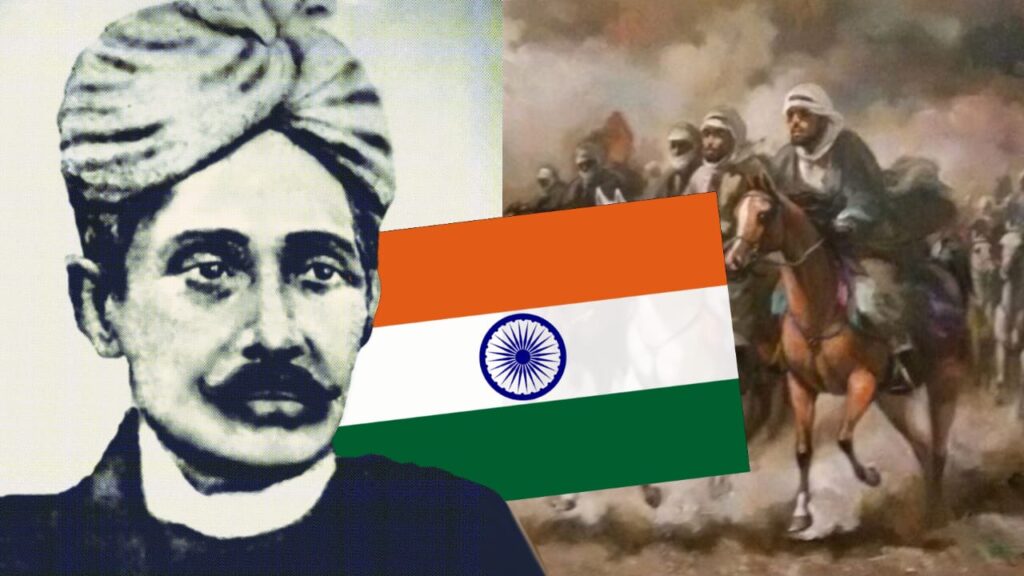
During the historic 1857 rebellion in Assam led by Maniram Dewan, Muslims played a vital yet often overlooked role. Key Muslim leaders like Bahadur Gaonbura and Sheikh Bhikun joined hands with Dewan and local revolutionaries, showing unity across communities against British colonial rule. Their Involvement underscored the shared struggle for freedom and the collective resistance of Assam’s diverse people against oppression. We have already discussed the lives of Bahadur Gaonbura, Formud Ali and Luki Senchowa Barua in solo articles previously released on Guwahati times. In this article we will discuss about the rest of the Muslim rebels in support of Maniram Dewan’s plan to revive the Ahom kingdom.
Two of the key leaders of the rebellion in Assam was were Subedars named Sheikh Bhikun and Nur Muhammad. On 29th August 1857, a secret meeting was held in the residence of Sheikh Bhikun in Golaghat, at 9 pm. A local doctor named Keramat Ali also took part in the meeting. They declared in this meeting that Kanderpeshwar Singha would be placed on the Ahom throne. Nonetheless the rebels were arrested and Sheikh Bhikun was sent to Dibrugarh. He was court-martialed there.¹ Naik Hidayat Khan was also one of the rebels associated with Sheikh Bhikon.²
We also come to know about one of the rebels who served punishment along with Bahadur Gaonbura and Formud Ali. His name was reportedly Nulla Khan.³ Nulla Khan was not the only other person who served punishment, there were others who faced the same consequences. These rebels were served long term or life time imprisonment. The names of these rebels are associated with Piyali Barua’s men who are Shaikh Oogni (or Ghani), Aly Khan and Hidayat Ali.⁴ Among these three names of Muslim rebels, Hidayat Ali was sentenced for life imprisonment along with Sheikh Bhikun.⁵ Hidayat Ali was also a native doctor⁶ just like Keramat Ali. Aly Khan also faced the same sentence of life imprisonment.⁷
Apart from these, the British documentation by Carter mentions a sepoy in Assam who chose to be a rebel and his name is recorded to be Shaikh Muhammad. This man was also arrested.⁶ There is yet another important Muslim man who not only took part in the freedom struggle but also earned martyrdom in the 1857’s Assam rebellion. It was Sardar Zulfikar Barua.⁸ Historian Mohini Kumar Saikia and Yasmin Saikia have identified Sardar Zulfikar barua to be Bahadur Gaonburah, but it is necessary to clarify that both Zulfikar Barua and Bahadur Gaonburah are two different people, because we know that Zulfikar was killed in 1857 whereas Bahadur Gaonburah died in 1891 (as discussed in a previous article). So now we know that there weren’t only two people (i.e Maniram Dewan and Piyali Barua) who were executed by the Britishers, rather there was indeed one more, an unsung hero who laid down his life for the sake of freedom.
It Is obvious that there were indeed more rebels whose names we are not aware of. We do know that when Kandarpeshwar Singha was arrested by the Britishers and was being taken to Nimati Ghat, about two thousand Muslim supporters of Kandarpeshwar went behind the Britishers, protesting to release the arrested King.⁹
It is also an interesting fact that Maniram Dewan, perhaps the biggest name in Assamese freedom struggle, was indeed influenced by none other than a Muslim man named Bahadur Khan Rohilla. Maniram had read a Fatwa that was issued by Bahadur Khan against the British East India Company, urging Indians to fight for independence. This very Fatwa had influenced Maniram Dewan to take part in the struggle for freedom.¹⁰
References:
- Quit India Movement In Assam (2007), by Anil Kumar Sharma, page 10
- Assam’s Men of Letters (1996), by Jnanananda Sarmma Pathaka, volume 1 page 119
- Asomar Musalmansakal (2013), by Abdur Rahman, page 290
- Untold Stories of the Freedom Struggle from North-East India (2022), by Samudra Gupta Kashyap, page 8
- Urban History of India (1994), by Deepali Barua, page 141
- Rethinking 1857 (2007), edited by Sabyasachi Bhattacharya, page 214
- Maniram Dewan and the Contemporary Assamese Society (1990), by Ajit Kumar Dutta, page 172
- IOSR Journal Of Humanities And Social Science, Volume 19, Issue 1, page 97
- Smritir Jilinganit Keigarakiman Asomor Musalman (2011), edited by Komoruzzaman Ahmed, Volume 1 page 52
- Maniram Dewan and the Contemporary Assamese Society (1990), by Ajit Kumar Dutta, page 146