


By Muhammad Talha Amin Baruah
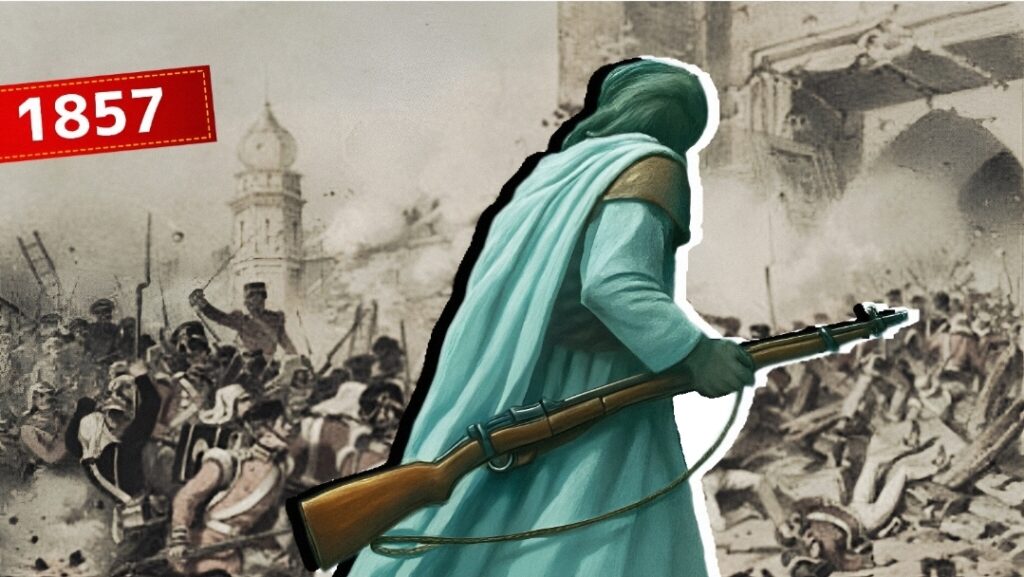
Sheikh Formud Ali was a courageous freedom fighter from Assam who played a key role in India’s First War of Independence of 1857 in present day upper Assam. He inspired local resistance to fight the British East India Company and help Maniram Dewan to revive the Ahom kingdom. He spent years imprisoned for his activism. But Formud is fading figure from the history of Assam.
Formud Ali was the son of Podu Mulla. He was the Gaonburah (village headman) of Bhogdoi mukh, Maut and Kaliyani village. He was supposedly born in Bhogdoi Mukh (which is in Jorhat) since his house was located there. Formud Ali was an Islamic scholar just like his father, hence he is often known as Sheikh Formud Ali. Formud had good relations with the Ahom king and the Ahom king – Kandarpeshwar Singha had appointed him as the Royal status by making Formud the chief/teacher of the royal musicians. Formud used to teach singing and proper use of musical instruments to his apprentices. Formud Ali was often known as ‘Behelabadok’ (violinist). Apart from that, he was also a very good tailor.
Formud had actively participated in the plot of overthrowing of the British East India Company rule from Assam and re-establish Ahom rule. Maniram has launched an armed insurgency against the British. But the Britishers discovered their plans and before they could act, they were arrested. Formud was one among the arrested rebels. Formud was trialed in the British court on 19th of August, 1858 and he was ultimately sentenced to life imprisonment in Cellular jail of Kala Pani (Andaman and Nicobar islands). The main charge that was put on Formud was that he was mobilising Muslims to participate in Maniram’s mission. He spent 14 years in Kalapani until he was released (due to the amnesty granted by Queen Victoria). Some do claim that he was released in September of 1863.
The British had looted all his property and he wasn’t able to retrieve any of it back. When he died he was buried near the banks of the Toklai River which is on the west side of the modern Farmud Ali Road. His grave was built of brick boundary, but it wasn’t preserved and now we cannot locate his grave. The estimation of Formud’s death is that he had died before 1896 or 1897. Sadly, Formud’s life journey is also not known much properly.
Some authors mistakenly assume Formud Ali to be Bahadur Gaonburah, but that is not true, they both are two different people. A painting depicting Bahadur Gaonburah is also claimed to be of Formud Ali, it’s not true either.
References :
1. Smritir jilingonit keigorakiman Axomar Musolman, volume 1 page 52-54
2. Cultural identity of indigenous Assamese Muslims, by Wasbir Hussain, page 17
3. Nationalist Upsurge in Assam (2000), edited by Arun Bhuyan, page 54
4. Assam in Indian Independence (1993), by Arun Bhattacharjee, page 12-14
5. All India Reporter (1949), volume 3 page 19
6. Political Life in Assam During the Nineteenth Century)(1987), by Bijay Bhushan Hazarika, page 371
7. 1857 in North East, by Subira Kara, page 16
8. Itihaxor Sahh-puhorot Goriya-Moriya-Dexi, by Mukut Sarma, page 322