Shivaji Maharaj and the Maratha Administration
By Sangini Banik, sanginibanik31@gmail.com
Shivaji Maharaj (1630–1680) was the founder of the Maratha Empire and one of India’s greatest warrior kings. Born at Shivneri Fort to Shahaji Bhonsle and Jijabai, he was inspired by his mother’s teachings and the guidance of Guru Ramdas. In 1674, Shivaji was crowned Chhatrapati (king) at Raigad Fort, marking the start of the Maratha Empire. He was known for his progressive administration, religious tolerance, and respect for women. Let us view his administration thoroughly.
Shivaji Maharaj’s administration was known for its efficiency, innovation, and focus on people’s welfare. He laid the foundation for the Maratha Empire with a system that balanced central authority and local autonomy, blending old traditions with new reforms. At the heart of Shivaji’s government was the Ashta Pradhan Mandal—a council of eight ministers, each handling a key department: Peshwa (Prime Minister), Amatya (Finance Minister), Mantri (Chronicler), Sachiv (Home Secretary), Sumant (Foreign Secretary), Senapati (Commander-in-Chief), Nyayadhish (Chief Justice) and Panditrao (Ecclesiastical Head). Shivaji appointed these ministers based on merit, not birth, and could transfer or dismiss them as needed. Most ministers (except Panditrao and Nyayadhish) also took part in military campaigns. Hereditary occupation of a post was not authorized under Shivaji’s rule.
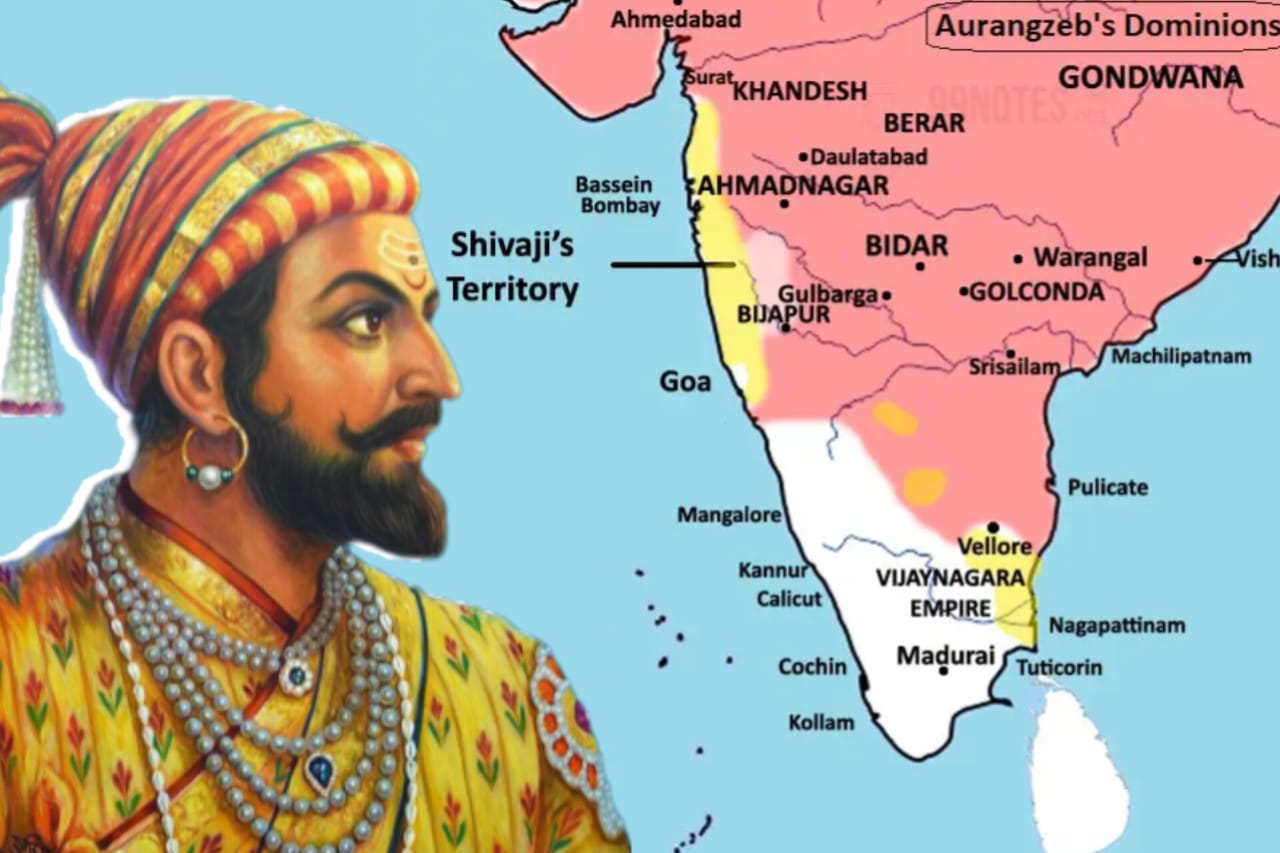
Shivaji’s dominion was divided into two parts: mulk-i-qadim (ancient territory) or swaraj (own kingdom), and an unspecified stretch of land that paid Chauth but was not under Shivaji’s authority. Shivaji abolished the old Jagir system, paying officers in cash instead of land grants. His revenue system, inspired by the Ryotwari model, collected taxes directly from peasants based on land productivity, reducing exploitation by middlemen. He also granted land for schools and temples, supporting education and religion. Chauth was an annual tax amounting to one-fourth of the total revenue while Sardeshmukhi, collected by Shivaji at a rate of one-tenth of the total revenue, was a levy assessed in addition to the Chauth. Together, these taxes provided the Marathas with a reliable and substantial source of income. This financial support enabled them to expand Maratha influence.
The judicial system under Shivaji was simple, primitive and crude. The system was founded on ancient Hindu rules. Justice was a priority. The Nyayadhish handled both civil and military cases, while local disputes were settled by village officials. Shivaji promoted fairness and discouraged corruption. Shivaji’s military was highly organized, with a focus on quick, mobile warfare. The army had six divisions , namely the cavalry, infantry, camel battalions, elephant battalions, artillery and navy. . He built a strong navy to protect coastal areas and trade. The police system was efficient, with Faujdar in rural areas and Kotwal in cities, ensuring law and order. Shivaji promoted Marathi and Sanskrit in administration, replacing Persian.
He was known for religious tolerance, appointing people of all castes and faiths, including Muslims and Europeans, based on ability. There cannot be a more decisive or heart-warming testimony to the catholicity and the tolerant outlook of the Maratha King than the fact that he specially built a mosque in front of his palace at Raigad so that his Muslim servants and subjects could offer their prayers according to the prescriptions of their own faith. Khafi Khan’s Muntakhab al Lubab notes, “Shivaji had made a strict rule that wherever his soldiers went they were not to harm mosques, the Quran or women. If he found a volume of the Quran, he would show respect to it and hand it over to a Muslim servant.”
Shivaji’s administration was a model of efficiency, innovation, and justice, setting the foundation for the Maratha Empire’s long-term success. He combined strong central authority with local autonomy, promoted merit over birth, and ensured fair revenue collection to support the welfare of his people. His policies of religious tolerance, social harmony, and decentralized governance not only unified diverse communities but also inspired future rulers across India. Shivaji’s legacy as a visionary administrator and nation-builder continues to be celebrated for its lasting impact on Indian governance