Beware ! Electricity Bill Pending SMS on your phone may be a scamster’s trick
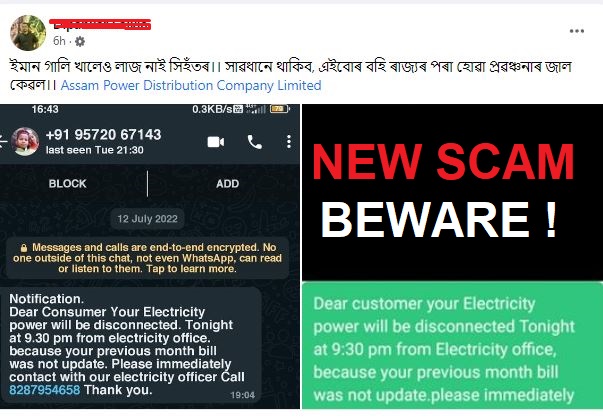
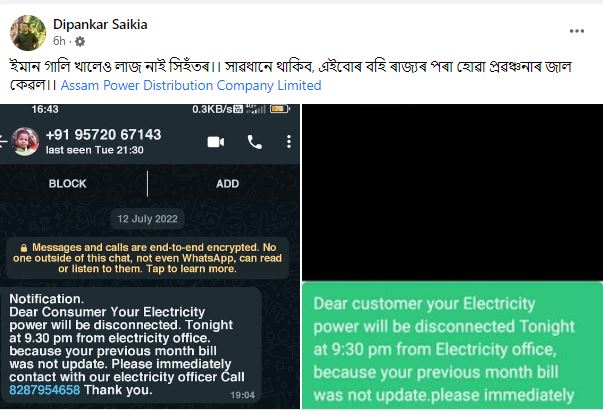
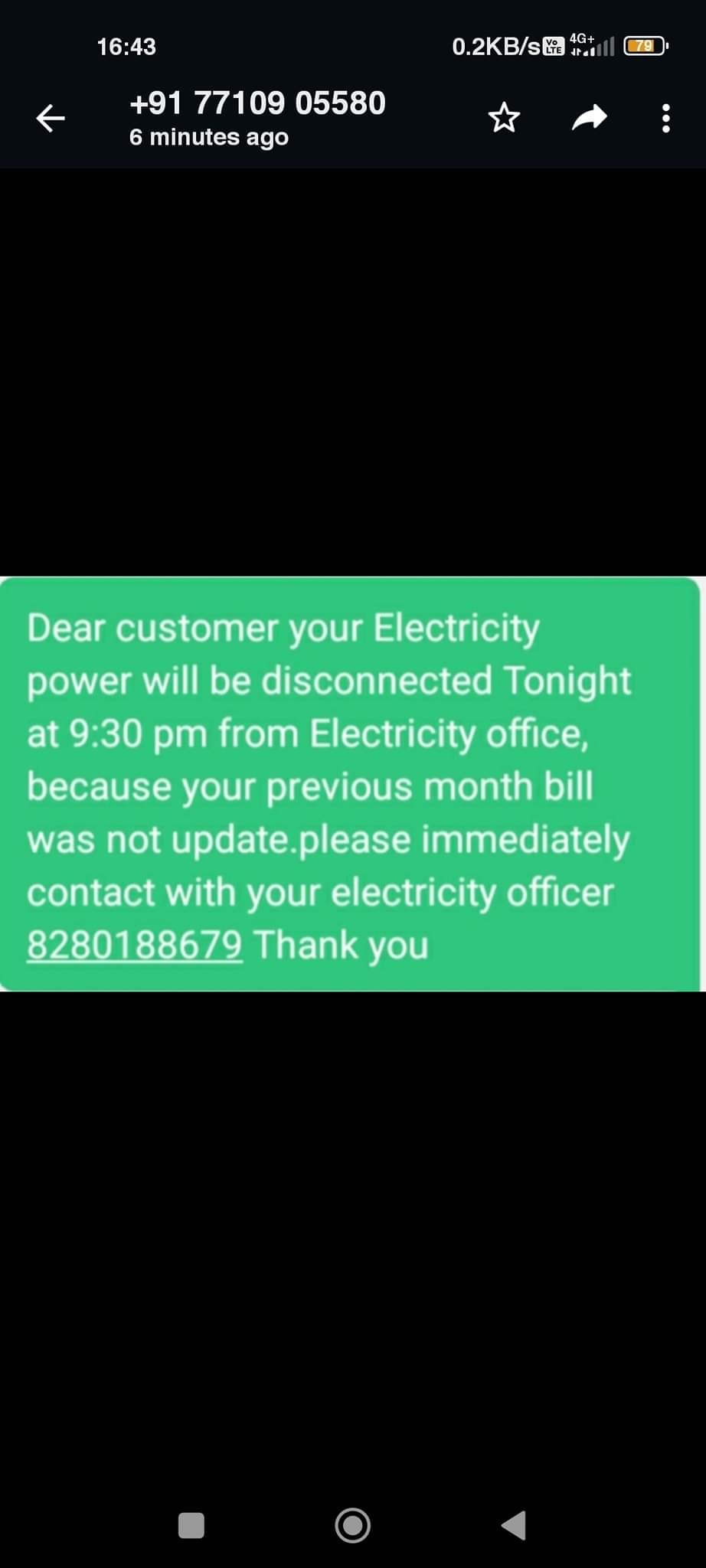
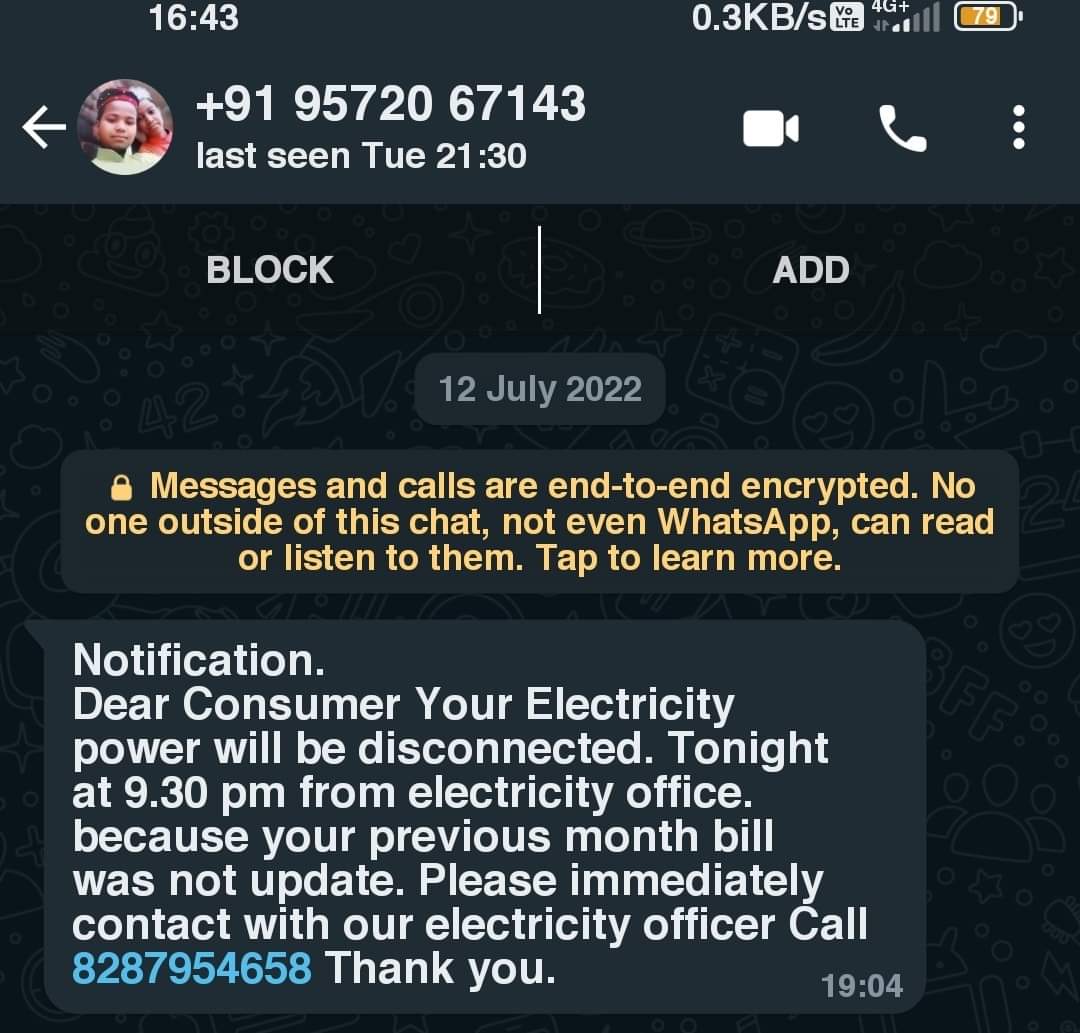
GUWAHATI: On Tuesday(12 July), Dipankar received an SMS and Whatsapp message demanding that he pay hia previous month’s electricity bill. The message said the power supply to his house will be disconnected if the dues are not paid. It also asked him to contact an ‘officer’ on a private number mentioned in the SMS.
Dipankar, who didn’t remember whether he paid the bill, called the number and as soon as the person who answered started speaking, Dipankar was quick to understand that it was a scam. Later he shared the screenshot of the SMS and the Whatsapp message on his social media.
Here are some basic steps to avoid being scammed:
- Verify the SMS source
- Do not pay bills from untrustworthy sources
- Do not install any apps that allow you to share your screen with others, through external links
- Beware of making payments to private accounts
- Do not call or click on the link provided in the message
- Do not contact on provided contact no or share any details
- Whenever telecom companies or electricity boards send an SMS, you will always see the sender ID. For example, for Jio, one can see this in the senders’ name — JioNet, JioHRC, JioPBL, JioFBR. Hence, if the sender ID does not contain the word “Jio”, one should exercise caution before responding
- Check the app or call the board/authority concerned to verify. Once you enter the consumer number in your UPI app or Gpay, as and when your new bill is generated, you’ll get the notification in the app itself. It’s better to pay from the app
- There’s a facility to disable transactions — whether online or through ATMs. There’s a toggle button. Enable only when you want to make a transaction. Or set up an online transaction limit.
Scammers won’t stop, so be your own guard!
Being vigilant, aware and having basic knowledge of technology is the only key to avoiding falling victim to these scams. Reading the above messages by authorities, one can easily figure out that the onus is primarily on oneself. This is because, at some point, the scammers need their target to step into the picture and share details like OTP or make the desired payment.