Greater Guwahati Buddhist Association Sends Delegation to Bodhgaya for Mahabodhi Mahavihara Mukti Andolan
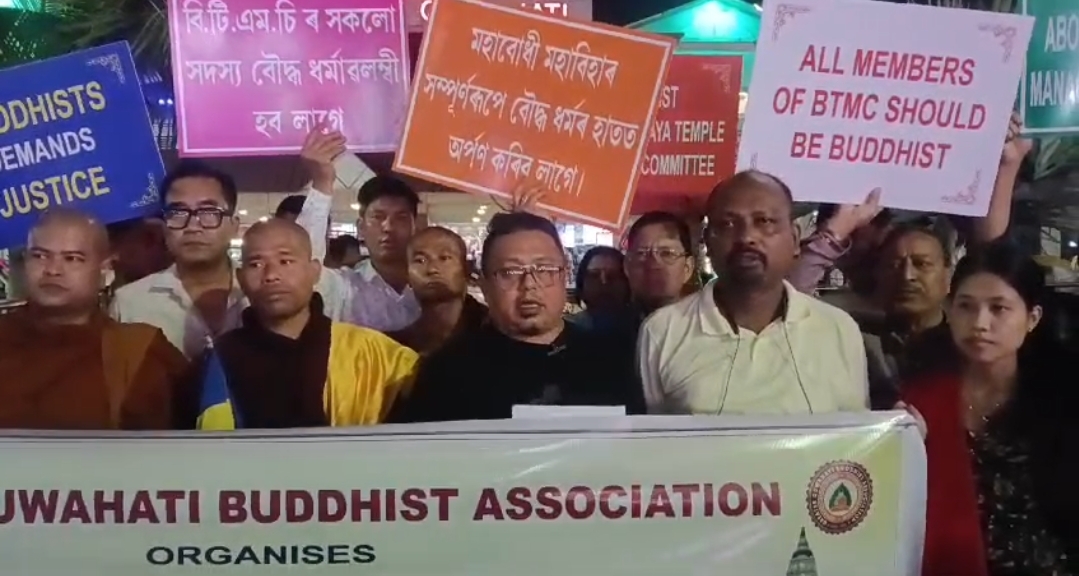
Guwahati, March 24 – A delegation from the Greater Guwahati Buddhist Association (GGBA) has embarked on a significant journey to Bodh Gaya, Bihar, to participate in the Mahabodhi Mahavihara Mukti Andolan, a movement demanding Buddhist control over the management of the Mahabodhi Mahavihara. The Guwahati team, which is actively advocating for the repeal of the Bodhgaya Temple Act of 1949, met me at the Guwahati Railway Station before their departure.
The GGBA, a regional organization registered under the Society Act of Assam, has been at the forefront of addressing cultural, religious, and social challenges faced by Buddhist communities. Their primary objective is to ensure that the management of the Mahabodhi Mahavihara—one of the most sacred sites for Buddhists worldwide—is placed entirely under Buddhist authority.
Call for Repeal of the Bodhgaya Temple Act, 1949
The Bodhgaya Temple Act, 1949, currently allows non-Buddhist authorities, including the District Magistrate of Gaya, to control the temple’s administration. Under this law, the Bodhgaya Temple Management Committee (BTMC) consists of nine members, of whom only four are Buddhists, while the remaining five, including the chairman, are non-Buddhists. The GGBA argues that this structure undermines the religious and constitutional rights of Buddhists in India.
“The Mahabodhi Mahavihara, where Bhagwan Buddha attained enlightenment, is not just a monument; it is the spiritual heart of Buddhism. The fact that Buddhists do not have full control over its management is a violation of our fundamental rights,” said a GGBA representative before leaving for Bodh Gaya.
Demands for Justice and Religious Freedom
The delegation has outlined the following key demands:
- Immediate repeal of the Bodhgaya Temple Act, 1949, and its replacement with legislation that ensures full Buddhist control over the Mahabodhi Mahavihara.
- Review of the issue by the National Commission for Minorities, as Buddhists are a recognized minority in India and should have autonomy over their sacred sites.
- Strict adherence to UNESCO World Heritage Site Protection Guidelines, ensuring the preservation of the Mahavihara’s spiritual and cultural significance without external interference.
The movement is backed by references to constitutional provisions, including Articles 13, 25, 26, and 29 of the Indian Constitution, which protect religious freedoms, as well as Article 18 of the Universal Declaration of Human Rights.
A Historic Stand for Buddhist Rights
This campaign is not just about administrative control but a larger fight for justice, dignity, and religious autonomy. GGBA has pledged to continue its advocacy until Buddhists regain their rightful authority over their most sacred site.
As the GGBA team moves forward with its protest in Bodh Gaya, the Buddhist community across India and beyond watches closely, hoping for a resolution that upholds their religious rights and the sanctity of the Mahabodhi Mahavihara.