Luki Senchowa Barua – the Assamese freedom fighter
By Muhammad Talha Amin Baruah
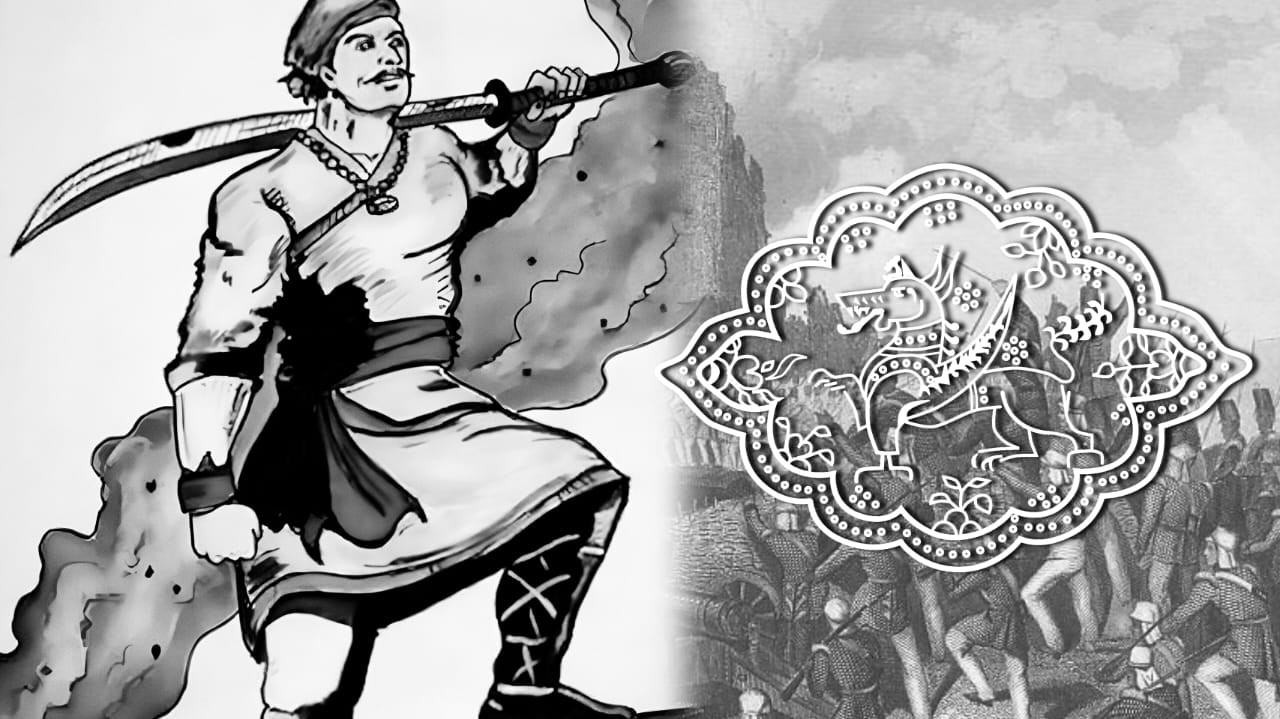
Luki Senchowa Barua was an important Ahom freedom fighter who played a significant role in the 1857 freedom movement in Assam. He was part of Maniram Dewan’s revolutionary circle, which united people from diverse backgrounds to challenge British rule. His courage and dedication helped build pan-Assam unity, making him a respected figure in Assam’s struggle for independence. We shall discuss Luki Senchowa Barua’s life journey through this article.
Luki Senchowa Barua was the son of Mahidhar Senchowa Barua. Senchowa Baruas are those superintendent officers who served the Ahom kings by looking after the falcons, by training them and organizing a fight among the falcons for the sake of entertainment. Luki Senchowa was the Son-in-Law of the Ahom king Jogeshwar Singha. Jogeshwar Singha had given his daughter Padmawati to Luki along with a land suitable for farming in Jorhat.
In 1857, Luki Senchowa Barua joined the rebel group of Maniram Dewan to overthrow British East India Company rule over Assam and to reinstate the Ahom kingdom under Kandarpeshwar Singha. But their plan was exposed and they were arrested for rebellion. Luki Senchowa Barua was sentenced for 14 years of exile in Andaman isles Jail. His ancestral land and other property at Kakojan was ceased by the British government.
On 16th of September 1863, (Queen Victoria) declared that all the rebels who didn’t kill any Britisher during the rebellion be pardoned. Under this condition, Bahadur Gaonbura, Formud Ali and many other Assamese freedom fighters including Luki Senchowa Barua were released from prison. All of them were transported from Andaman to Calcutta. But when the ship reached the Calcutta port, Luki Senchowa Barua jumped into the sea and disappeared. His disappearance was reported by Bahadur Gaonbura and Formud Ali.
Meanwhile Padmawati had left Jorhat along with her son Nomoram and settled in Harucharai Khat, which was offered by Jogeshwar Singha to Luki Senchowa. She was given a pension of 120 rupees by the British government and was forced to be part of the opium trade. She used to trade opium among the youngsters of the Ahom aristocrat families and was started to be known as ‘Tupuli Aideo’. Sadly, she was reduced to the status of an opium vendor from an aristocrat herself. Padmawati never saw her husband again, and didn’t know if he was alive or not, and when 14 years had passed, she observed the rituals considering Luki Senchowa Barua to be dead.
But the fact was that Luki had survived after jumping into the sea. He went to the shores of Calcutta and came back to Assam in disguise. Upon his return, he inquired about his wife and son, but never went to visit them. It was most probably because he didn’t care to face his wife again, also he was aware that she is now an opium vendor. And he might also have considered that the Hindu society looks down on those people who were jailed and also upon those who crossed the sea since it was considered sinful.
Therefore, Luki Senchowa Barua instead went to his rebel teammate Morongikhowa Gohain Ugrasen in Golaghat. They planned to rebel against the Britishers again, but seemingly never executed their plan. In Golaghat, Luki Senchowa met a Muslim widow named Parijan Begum, who was previously his childhood friend. They were married and Luki Senchowa Barua converted to Islam. He lived with his 2nd wife for the rest of his life, staying in Golaghat.
References
- The Mirror volume 10, 2023. Edited by Dr. Anjan Saikia. Cinnamara College Publication, Jorhat. Pg 136-140
- Maniram Dewan and the Contemporary Assamese Society (1990). By Ajit Kumar Dutta. Anupoma Dutta, Assam. Pg 180
- Bagh Hazarika and the Buranji Puthis (2025). By Zarid Hussain. Lord Publishing company. Pg 114