Nagaland University Leads Groundbreaking Archaeological Study to Uncover Indigenous Climate Resilience for Food Security
By Footprint Global Communications | Lumami, Nagaland | June 16, 2025
In a pioneering effort blending archaeology, community engagement, and climate science, Nagaland University has launched a transformative research initiative aimed at uncovering ancient climate adaptation strategies that could inform modern-day food security policies in Nagaland and beyond.
Funded by the Australian Research Council and conducted in collaboration with leading global institutions—including the University of Sydney, La Trobe University, University of York, and the Birbal Sahni Institute of Palaeosciences—this four-year multidisciplinary project seeks to reconstruct the prehistoric life and environmental responses of Naga communities from the Holocene to the Anthropocene.
At its core, the project involves extensive archaeological and palaeoclimate investigations, particularly focusing on prehistoric sites and ancestral village settlements buried beneath modern habitations. These sites not only provide physical evidence of pre-agricultural and pre-colonial life but also serve as cultural markers for Indigenous narratives of origin and migration.
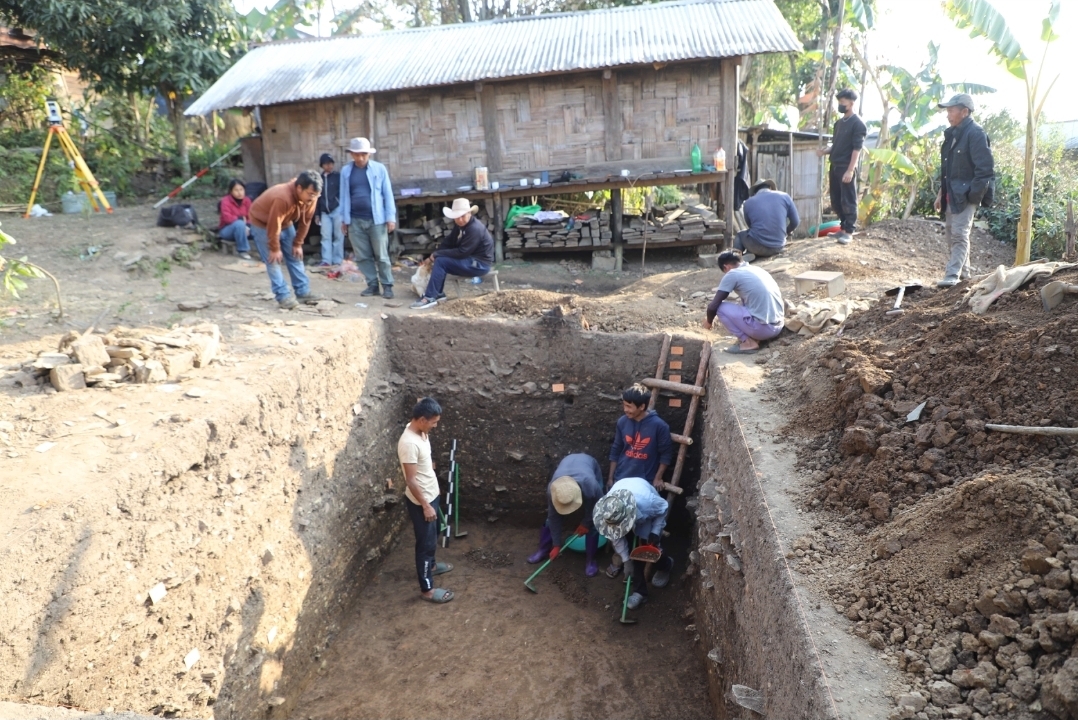
Led by Prof. Tiatoshi Jamir of Nagaland University’s Department of History and Archaeology, the research team is conducting excavations with the direct involvement of local communities in Langa (Shamator District) and New Phor (Meluri District). Through oral histories, community films, and traditional knowledge sharing, these participatory methods aim to honor Indigenous ownership while enriching academic inquiry.
Key areas of study include soil sampling for phytoliths, analysis of ancient pottery residues to trace culinary patterns, and radiocarbon dating of charred plant remains. These efforts will help create a long-term environmental and nutritional chronology that could support sustainable agricultural practices tailored to modern climate challenges.

Prof. Alison Betts from the University of Sydney emphasized the future-focused vision of the project: “By working closely with communities, we are able to uncover long-standing food systems and past climate adaptations that could inspire contemporary resilience strategies.”
The research also challenges the criticism of traditional farming methods like jhum (slash-and-burn cultivation), presenting scientific evidence on their ecological benefits, such as biodiversity preservation and resistance to crop failure under extreme weather conditions.
The findings, expected to result in a range of scientific publications and actionable recommendations, will be shared widely with both academic audiences and the communities involved. The ultimate goal: to establish a model of sustainable development that is deeply rooted in historical knowledge and indigenous wisdom.
As younger generations move away from traditional agrarian lifestyles and climatic unpredictability intensifies, this initiative offers a timely and vital perspective on how the past can guide the future.