Life of Ramani Gabhuru (Rahmat Banu Begum)
By Muhammad Talha Amin Baruah
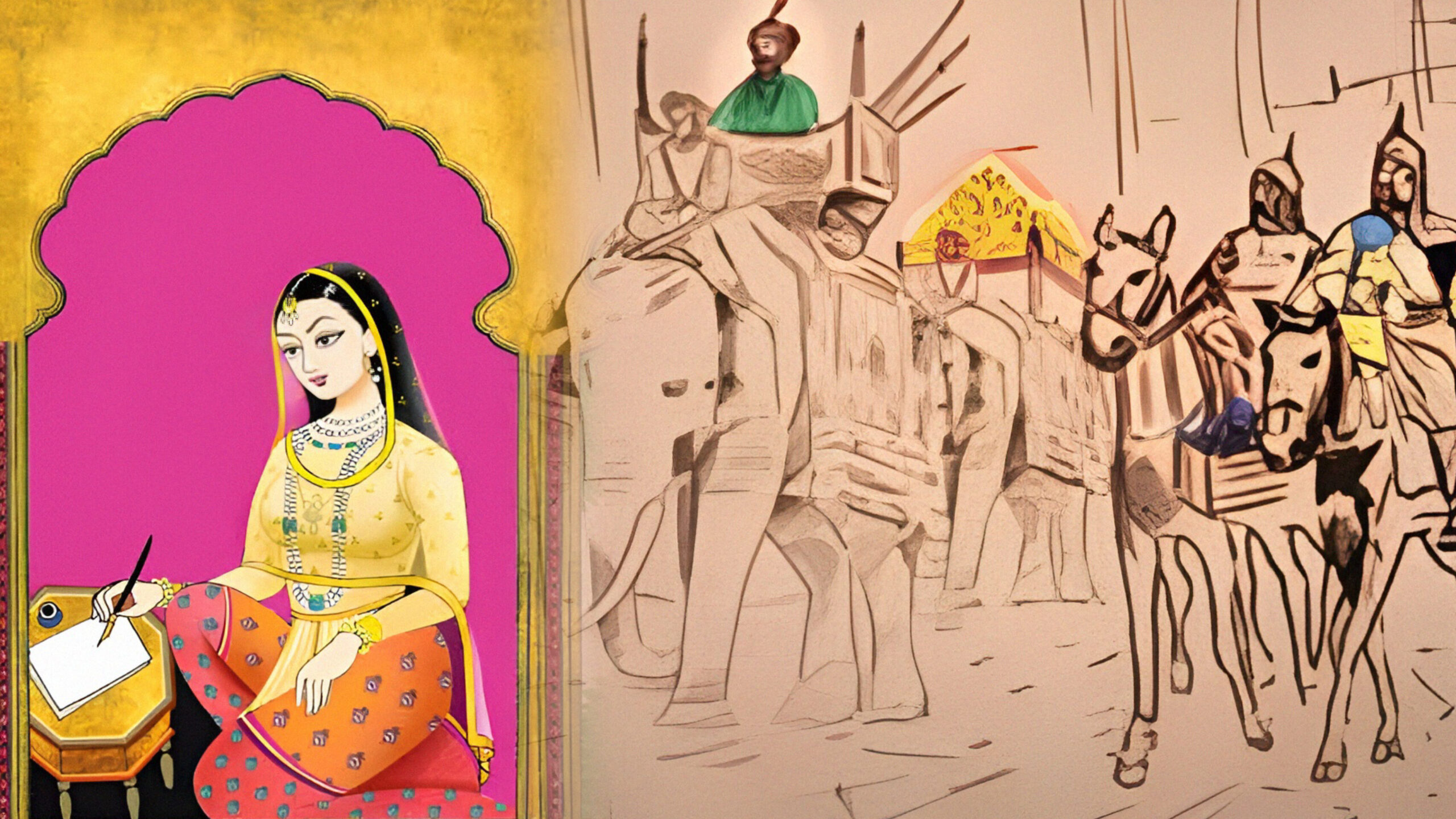
Ramani Gabhuru was an Ahom Princess. She is a lesser known important character from the history of Assam. Her life is a cultural transition between the Mughals and the Ahoms. Her bold stance towards her homeland even after being the wife of Azam Shah serves as a fascinating chapter of Assam history.
Ramani Gabhuru (spelled as ‘Romoni Gabhoru’) was born in the year 1657 to the Ahom king Jayadhwaj Singha and his wife Queen Pakhari Gabhuru at Garhgaon. Ramani’s real name was Nangchen Gabhuru (or maybe Langcheng Gabhuru). She was the niece of Laluksola Borphukan and the famous Ahom commander – Lachit Borphukan.
In January of 1663, when the Mughals under Mir Jumla defeated the Ahom king Jayadhwaj Singha, the treaty of Ghiladhari was signed between the Ahom king and the Mughal generals Mir Jumla & Diler Khan. This treaty reinstalled Jayadhwaj Singha as the Ahom king but as a vessel state of the Mughal empire. Jayadhwaj sent his daughter Ramani Gabhuru, 4 sons of a Phukan. Along with that, he paid 20,000 tolas of gold, 1,20,000 tolas of silver and 40 elephants who were dressed. The Ahom king also agreed to pay 3,00,000 tolas of silver and 90 elephants in three installments. And the sons of Burhagohain, Borgohain, Phukan and Barpatra Phukan were taken hostages, only to be released when the king pays the installments. When Ramani was given for the Mughal harem, she is said to have been 6 years old as mentioned by Ramani in one of her letter to Laluksola.
Ramani was converted to Islam and was sent to Delhi where her upbringing was done by Aurangzeb. When Ramani hit puberty, Aurangzeb gave her in wedding to his son Azam Shah on 2nd May of 1668. She had changed her name from Ramani Gabhuru to Rahmat Banu Begum after her Nikah (wedding) commenced. She used to send gifts to the Ahom king and the famous commander of Ahom army – Bagh Hazarika was also sent by Rahmat Banu Begum to Assam from Delhi.
Laluksola wanted to increase his power during the time when a Borborua was growing his influence in the Ahom Kingdom. Laluksola turned to Azam Shah, who was the Subedar of Bengal during those days. Azam Shah agreed to help Laluksola with military help in exchange for Guwahati. Azam Shah also promised Laluksola that he would be made the king of eastern Assam due to his service to the Mughal empire, and since Laluksola Borphukan was the uncle-in-law of Azam Shah, he wanted to see him on a higher post. It was that Rahmat Banu Begum, who came to Bengal in 1678 and wrote to Laluksola warning about the consequences of surrendering Guwahati to the Mughals.
In one of her letters to her uncle – Laluksola Borphukan during this time dated 13 April 1678, she presents grief about her departing from her family when she was 6 years old. She complaints that now that she is 19 years old, she still didn’t receive any enquiries from the Ahoms about her. She also thanked Laluksola for the gifts sent by him. Her letter thus seem that she is a devout believer of Islam as she mentioned multiple times in the letter that she worships Allah.
Nothing is known about her death but there are claims which are not evident by any means, but just theories. Above is everything what we know about Ramani Gabhuru or Rahmat Banu Begum.
References :
- Atan Buragohain and his times, by Suryya Kumar Bhuyan, page 31,283-284,295-296, 338-340
- The life of Mir Jumla : the general of Aurangzeb, by Jagadish Narayan Sarkar, page 269
- Itihaxor Sahh-puhorot Goriya-Moriya-Dexi, by Mukut Sarma, page 321
- Bagh Hazarika and the Buranji Puthis, by Zarid Hussain, page 84-85
- Tarikh-e-Aasham, by Shehabuddin Talesh, page 131