Memes, ‘Mama’ & Messaging: How Social Media Shaped Assam’s 2026 Verdict
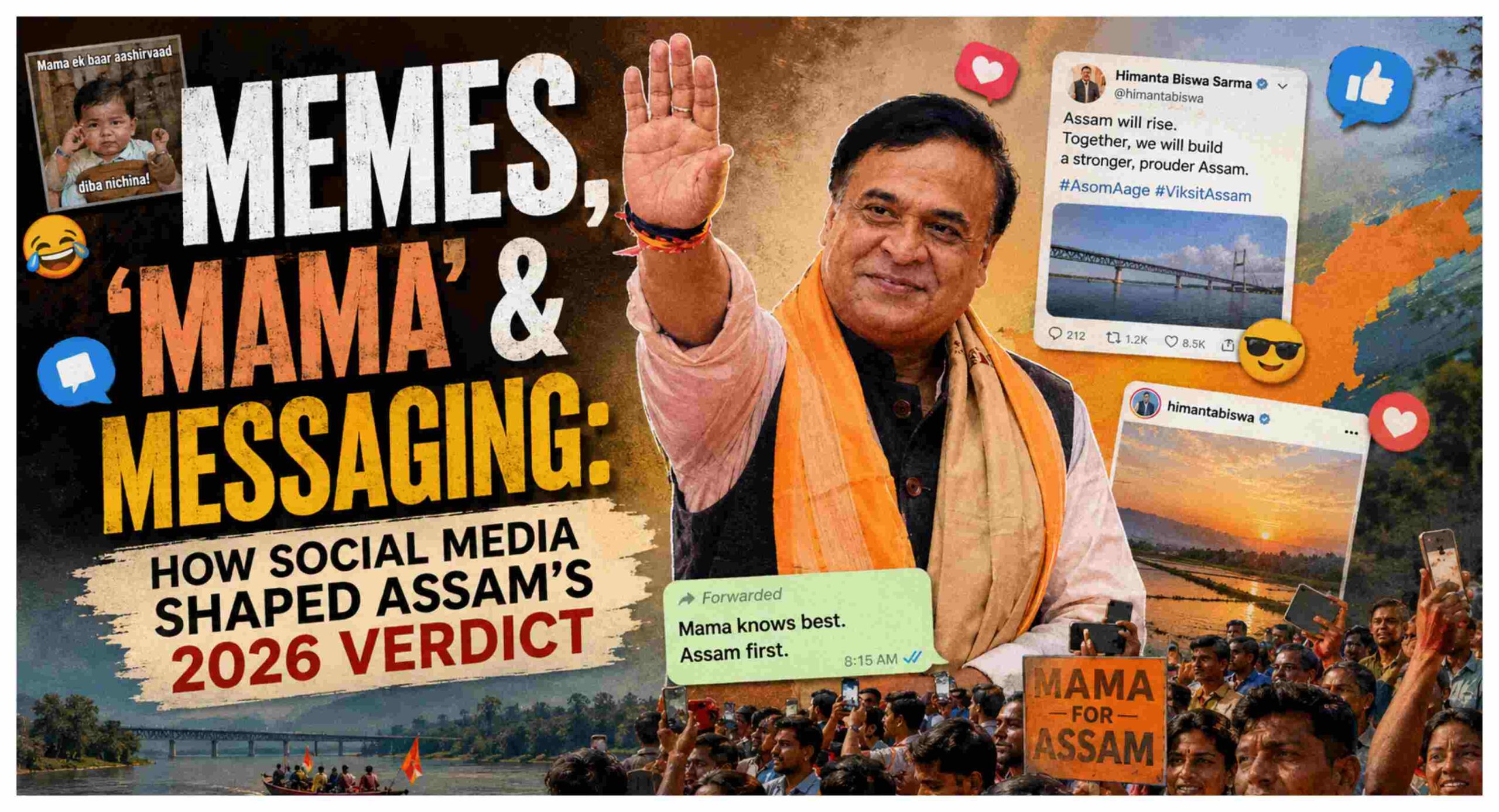
In Assam’s 2026 assembly elections, political campaigning extended well beyond rallies and ground outreach, unfolding vigorously across social media. A coordinated and sustained online effort by the Bharatiya Janata Party (BJP) and its supporters played a major role in shaping public narratives—especially around identity, culture, and voter alignment.
At the centre of this digital push was Chief Minister Himanta Biswa Sarma, who was widely branded online as “Mama.” Through memes, short-form videos, and youth-focused content, he was portrayed as both a protector of Assamese identity and a development-driven, decisive leader. This carefully curated image gained significant traction across platforms.
In contrast, the Indian National Congress (Congress) was frequently framed in a negative light. It was repeatedly labelled a “Miya party”—a politically loaded term in Assam often associated with Bengali-origin Muslims. Social media posts, visuals, and commentary amplified claims that the party was sympathetic to illegal immigration, reinforcing this perception among online audiences.
Opposition figures such as Gaurav Gogoi and Kunki Chaudhary were regularly targeted through viral content and coordinated messaging designed to question their credibility. These campaigns fed into a broader narrative that painted Congress as disconnected from indigenous Assamese concerns.
Digital engagement trends reflected the reach of this strategy. Pro-government content drew high levels of interaction, with recurring themes centred on Sarma as a guardian figure, increasing distrust toward Congress, and a growing sense among users that Assamese cultural identity was under threat.
The election results underscored Congress’s difficulties. The party suffered its third consecutive defeat in Assam, winning only 20 seats and electing just one Hindu MLA. Its support appeared to weaken notably in Hindu-majority constituencies.
Analysts attribute this shift to multiple factors. The BJP’s strong emphasis on Hindu identity politics played a significant role, alongside pre-existing tensions between sections of Assamese Hindus and Bengali Muslim communities. However, the influence of digital campaigning has drawn particular scrutiny.
Over the past two years, a large network of pro-BJP accounts—reportedly numbering in the thousands—ran targeted campaigns using smaller platforms, influencers, and anonymous or “shadow” profiles. One such initiative, known online as the “Paaijan” campaign, focused on Gogoi, attempting to link him with Pakistan. This narrative gained momentum following a state Special Investigation Team report alleging connections between Pakistani entities and Elizabeth, Gogoi’s UK-based wife.
Simultaneously, Congress leaders and supporters were often labelled with terms like “Miya Lovers” or “Miya IT Cell.” Posts highlighting Muslim participation at Congress events or online support further reinforced the perception that the party’s base was largely drawn from minority communities.
The discourse intensified when the chief minister claimed that thousands of Bangladeshi Muslim Facebook accounts were backing Congress online. Such statements added fuel to an already active conversation around identity and political loyalty.
Additionally, video clips—some purportedly originating from Pakistan—circulated online praising Gogoi. AI-generated visuals and coordinated comment campaigns across platforms like Facebook, Instagram, and X contributed to a persistent stream of messaging portraying Congress as aligned mainly with Muslim interests.
By the time the votes were counted, the cumulative impact of these digital efforts was evident. The BJP not only dominated the online narrative but also appeared to shape wider public perception, highlighting the growing influence of social media ecosystems in modern electoral politics.