Nalbari Records Progress in Maternal and Child Healthcare, NHM Data Shows
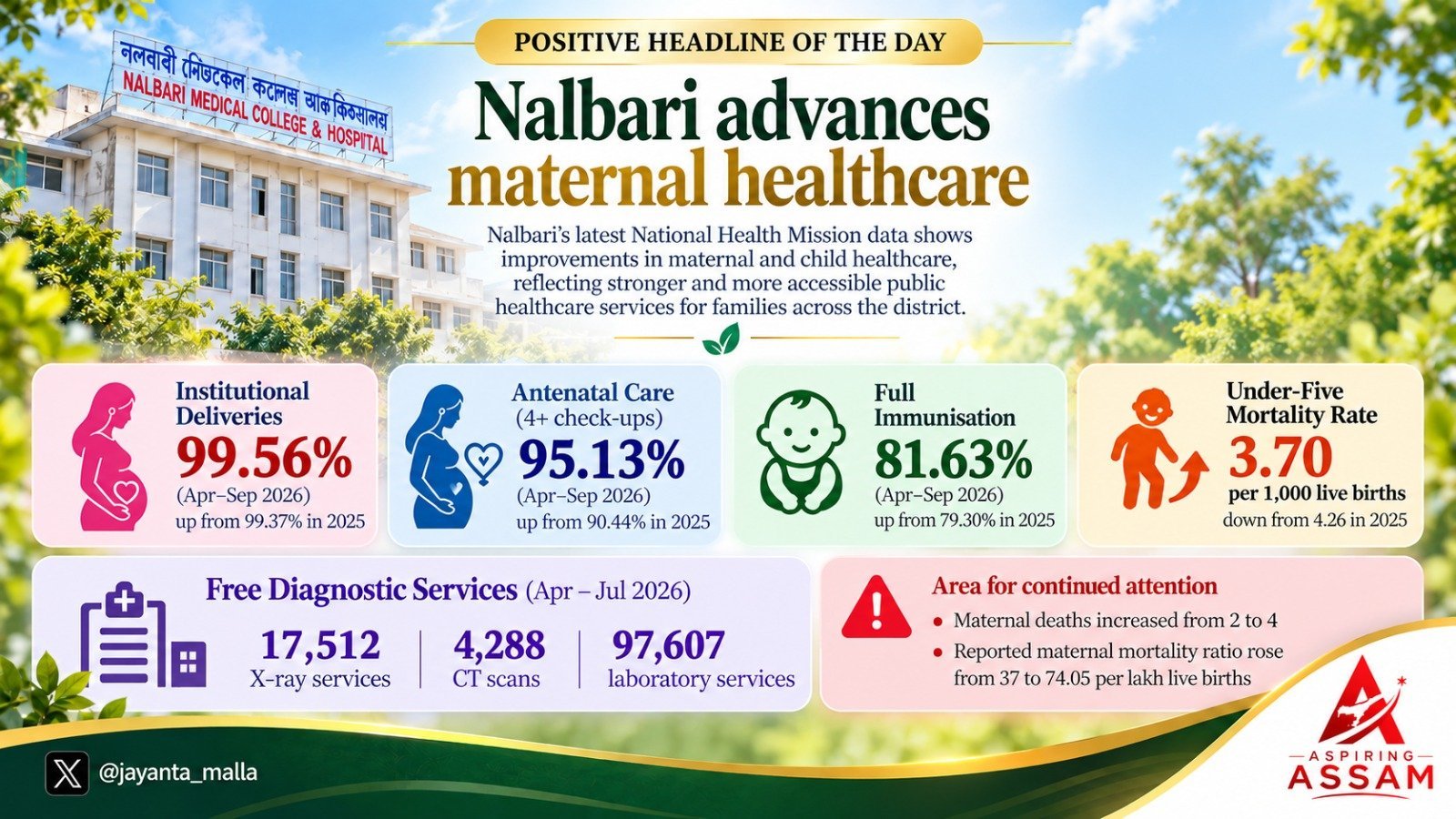
Nalbari, Assam: Nalbari has recorded improvements in several maternal and child healthcare indicators, with institutional deliveries reaching 99.56% and antenatal care coverage rising to 95.13% during April–September 2026, according to the latest National Health Mission (NHM) data shared by Assam Cabinet Minister Jayanta Mallabaruah.
The minister, who represents Nalbari in the Assam Legislative Assembly, highlighted the district’s healthcare progress in a social media post, pointing to improvements in institutional deliveries, antenatal check-ups, child immunisation and access to diagnostic services.
Institutional Deliveries and Antenatal Care Improve
The NHM data shows that 99.56% of deliveries in Nalbari took place in health institutions during April–September 2026, up from 99.37% in the corresponding period of 2025. The number of institutional deliveries increased from 5,372 to 5,391, while home deliveries declined from 34 to 24.
Antenatal care coverage also improved. The proportion of pregnant women receiving four or more antenatal check-ups rose from 90.44% to 95.13%, with the number increasing from 5,212 to 5,564.
Regular antenatal check-ups help monitor maternal and foetal health, identify potential complications and support timely medical intervention during pregnancy.
Child Immunisation and Under-Five Mortality
The report also indicates progress in child healthcare. Full immunisation coverage increased from 79.30% to 81.63% during the reporting period.
Meanwhile, recorded under-five deaths declined from 23 to 20, and the reported under-five mortality rate fell from 4.26 to 3.70 per 1,000 live births.
These indicators reflect progress in child health services, although continued efforts are needed to improve immunisation coverage and ensure access to essential healthcare for all children.
More Than 1.19 Lakh Diagnostic Services Recorded
Access to diagnostic facilities was another area highlighted in the data. Between April and July 2026, Nalbari recorded 17,512 free X-ray services, 4,288 free CT scans and 97,607 free laboratory services.
Together, these figures amount to 1,19,407 recorded diagnostic services during the four-month period.
Access to diagnostic services can help patients receive timely investigations and support healthcare workers in identifying and managing medical conditions.
Rise in Maternal Deaths Remains a Concern
Despite the improvements in several indicators, the data also points to an area requiring urgent attention. Recorded maternal deaths increased from two to four, while the reported maternal mortality ratio rose from 37 to 74.05 per lakh live births.
The increase highlights the importance of continued efforts to strengthen maternal healthcare, improve risk assessment during pregnancy and ensure timely access to emergency obstetric care.
The figures also require careful interpretation, as maternal mortality indicators can be affected by small numbers of recorded deaths and changes in reporting.
The latest NHM data presents a mixed picture of Nalbari’s healthcare performance, with gains in institutional deliveries, antenatal care, immunisation and diagnostic services alongside concerns over maternal deaths. Sustained attention to maternal safety and equitable access to healthcare will remain essential to building on the district’s progress.
Data source: NHM health indicators report shared by Jayanta Mallabaruah. Maternal and child health indicators compare April–September 2025 with April–September 2026; diagnostic service figures cover April–July 2026.