Massive Protest at Jantar Mantar Against 20% Ethanol-Blended Petrol
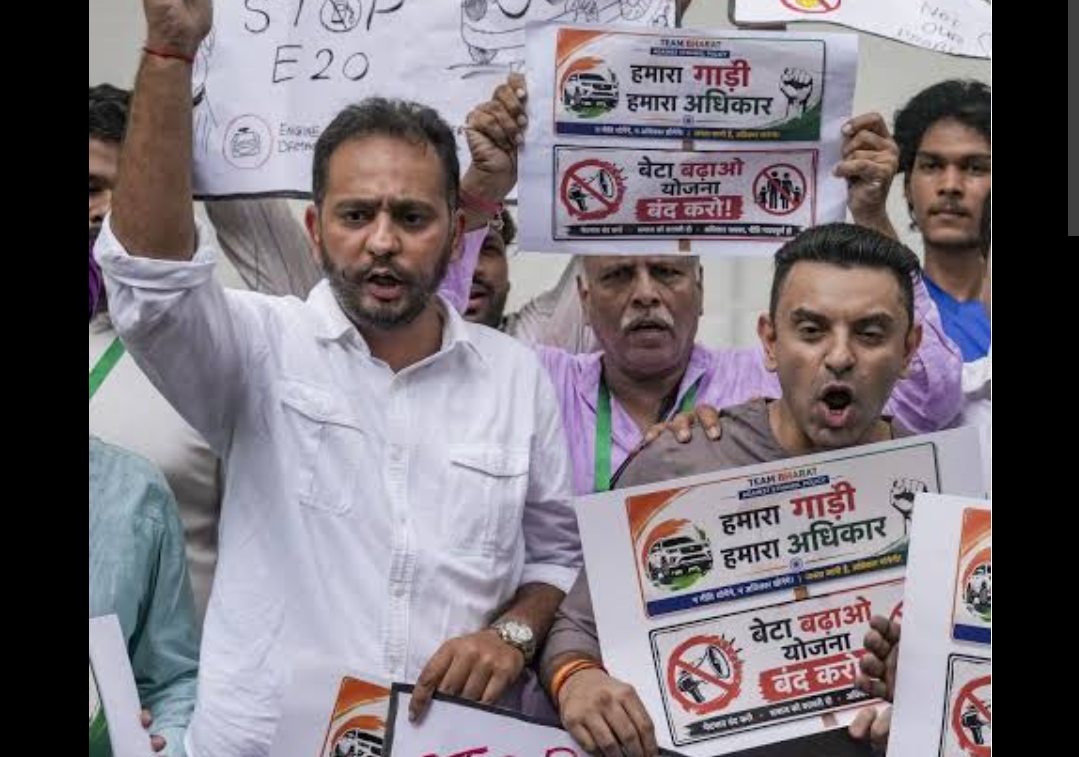
GUWAHATI: Car owners, automobile enthusiasts, and members of Team Bharat, including entrepreneur and TV personality Tehseen Poonawalla, staged a protest at Jantar Mantar on Tuesday, July 7, against the Centre’s 20% ethanol-blending (E20) mandate. Several BJP and RSS supporters also joined the demonstration, saying they were not opposing the Ethanol Blended Petrol (EBP) programme, but the way it was being implemented.
According to media reports, the protest was “apolitical” and driven by concerns of vehicle owners. It marked the first time car owners took their objections beyond social media and onto the streets, demanding that the government allow consumers to choose between different petrol variants instead of making E20 the only available option.
The protesters argued that millions of E5 and E10-compliant vehicles were not designed to run on higher ethanol blends. They claimed consumers were being forced to use E20 petrol despite concerns over fuel efficiency, engine performance, and long-term reliability.
While social media has been flooded with claims of reduced mileage and engine damage due to E20 fuel, the Centre has consistently rejected these allegations. The government, along with automobile manufacturers and technical experts, has maintained that extensive testing has found no evidence that E20 causes vehicle damage or significant mileage loss.
A group of experts from the automobile and energy sectors also defended the government’s ethanol-blending programme, saying multiple studies have found E20 to be safe for compatible vehicles. Union Minister Nitin Gadkari has repeatedly addressed the issue in press briefings and podcast interviews, assuring the public that E20 petrol is safe.
Despite these assurances, car owners and automobile enthusiasts participating in the protest continued to question the government’s position.
Big Mileage Drop Even in E20-Compatible Vehicles, Claims Car Owner
Car owner Verma claimed that even E20-compatible vehicles deliver lower mileage. He said both his Hyundai Creta and Bajaj Pulsar returned lower fuel efficiency after switching to ethanol-blended petrol. He also alleged that both vehicles developed engine knocking issues.
Verma questioned Union Minister Nitin Gadkari over India’s ethanol-blending policy and urged the government to address consumers’ concerns.
Why Are People Protesting Against the Ethanol-Blending Programme?
India had initially set a target of achieving 20% ethanol blending in petrol by 2030, but reached the goal in December 2025.
The government says ethanol blending has increased from 1.5% in 2013-14 to 20% in 2025-26, helping reduce India’s dependence on imported crude oil, which accounts for nearly 90% of the country’s oil requirement. Officials also say the programme saves foreign exchange and supports energy security.
However, protesters insisted they were not against the ethanol policy itself, but against its implementation.
They argued that E20 petrol is being supplied even for E10-compliant vehicles without offering any alternative. One protester said he had to fill E20 in his E10-compliant car just to reach the protest venue. Cars manufactured before April 2023 are generally E10-compliant, and more than 80% of cars in India, as of 2024, are reportedly not E20-compliant.
BJP Supporters Also Raise Concerns
The protest drew attention as several BJP supporters publicly questioned the current implementation of the ethanol policy, both online and at Jantar Mantar. Their primary demand was that consumers should have the freedom to choose their fuel instead of being compelled to use E20.
JNU professor Anand Ranganathan said, “Progress needs choice, not force.” He suggested E20 should be reserved for energy emergencies and argued that the costs of widespread ethanol blending outweigh its benefits.
Randeep Sisodia criticised the BJP IT Cell for mocking people’s concerns over E20, calling it “in very bad taste.” He said that if they could not empathise with people’s concerns, they should remain silent rather than dismiss legitimate questions.
Although the gathering at Jantar Mantar was relatively small, the protest generated widespread attention because it reflected growing concerns among vehicle owners. Participants maintained that the issue was not political, but centred on consumer choice and the long-term impact of mandatory E20 fuel on existing vehicles.